What Good Commercial Electrical Delivery Looks Like
A commercial electrical job can look straightforward on a drawing. In practice, power, lighting, data, security, mechanical services and controls all compete for the same ceiling space, risers, switchrooms and programme. The job runs better when those parts are planned together from the start.
That matters whether the project is an office fitout, a warehouse, a car yard, a retail site or an upgrade in an occupied building. Good commercial delivery is not just about finishing the cable installation. It is about leaving a system that can be tested, operated and maintained without unnecessary work later.
Start with a scope people can actually use
The first useful step is to assign the interfaces. Who supplies power to the mechanical equipment? Who provides the isolator? Where does the fire alarm interface finish and the controls wiring begin? Who supplies the access-control hardware, and who brings the network connection to it?
If these questions are left until installation, they usually turn into variations, delays or missing work at commissioning. A short responsibility schedule and a marked-up drawing are often more valuable than pages of general wording.
Lighting should suit how the building is used
Commercial lighting is about more than meeting a lux level. Offices need comfortable, controllable light. Warehouses need reliable coverage through working aisles. Car yards need strong presentation lighting without wasting power through the quietest part of the night.
Occupancy control, scheduling and daylight harvesting can reduce energy use, but only when the sensors, zones and override controls match the way the site operates. A badly placed sensor or an overly complicated control sequence will often be bypassed. Simple controls that make sense to staff tend to deliver better long-term results.
Allow for data, security and access early
Networking, CCTV and access control are frequently considered after the main electrical routes have been agreed. By then, the useful containment and equipment space may already be taken.
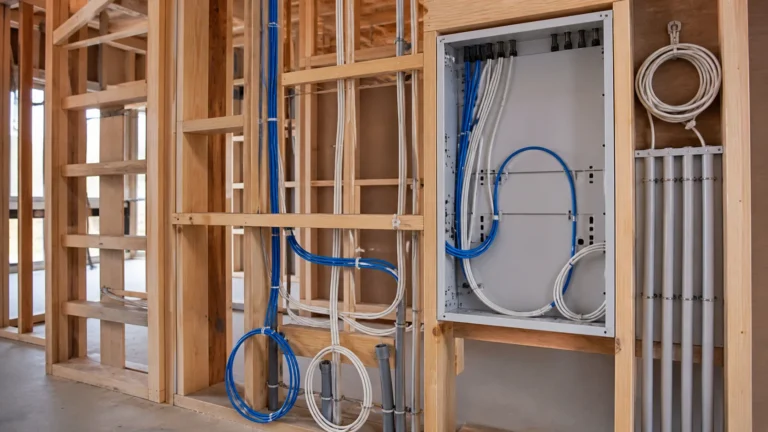
Early coordination allows for camera positions, door hardware, communications racks, wireless access points and the power supplies that support them. It also keeps the installation tidy and gives future upgrades somewhere sensible to go.
Plan capacity, not just today’s load
Solar, EV charging and changes in tenant equipment can alter a building’s electrical demand. That does not mean every project needs oversized infrastructure, but the likely next steps should be understood before switchboards and cable routes are locked in.
For EV charging in particular, available supply, diversity, load management and operating hours matter more than simply counting chargers. A staged approach can provide a workable starting point while preserving capacity for expansion.
Commissioning needs time in the programme
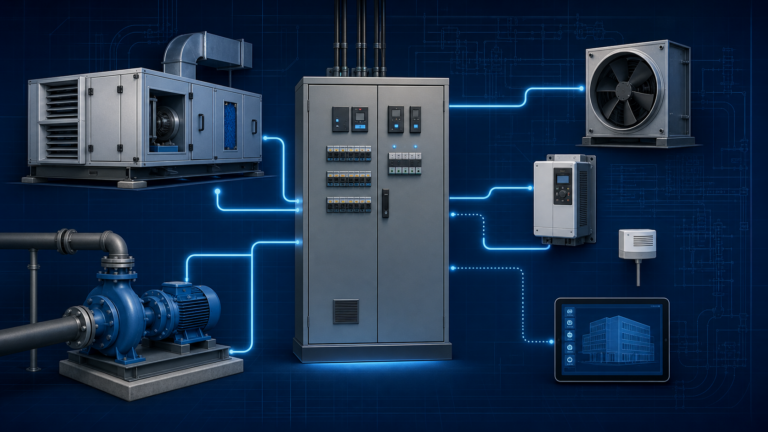
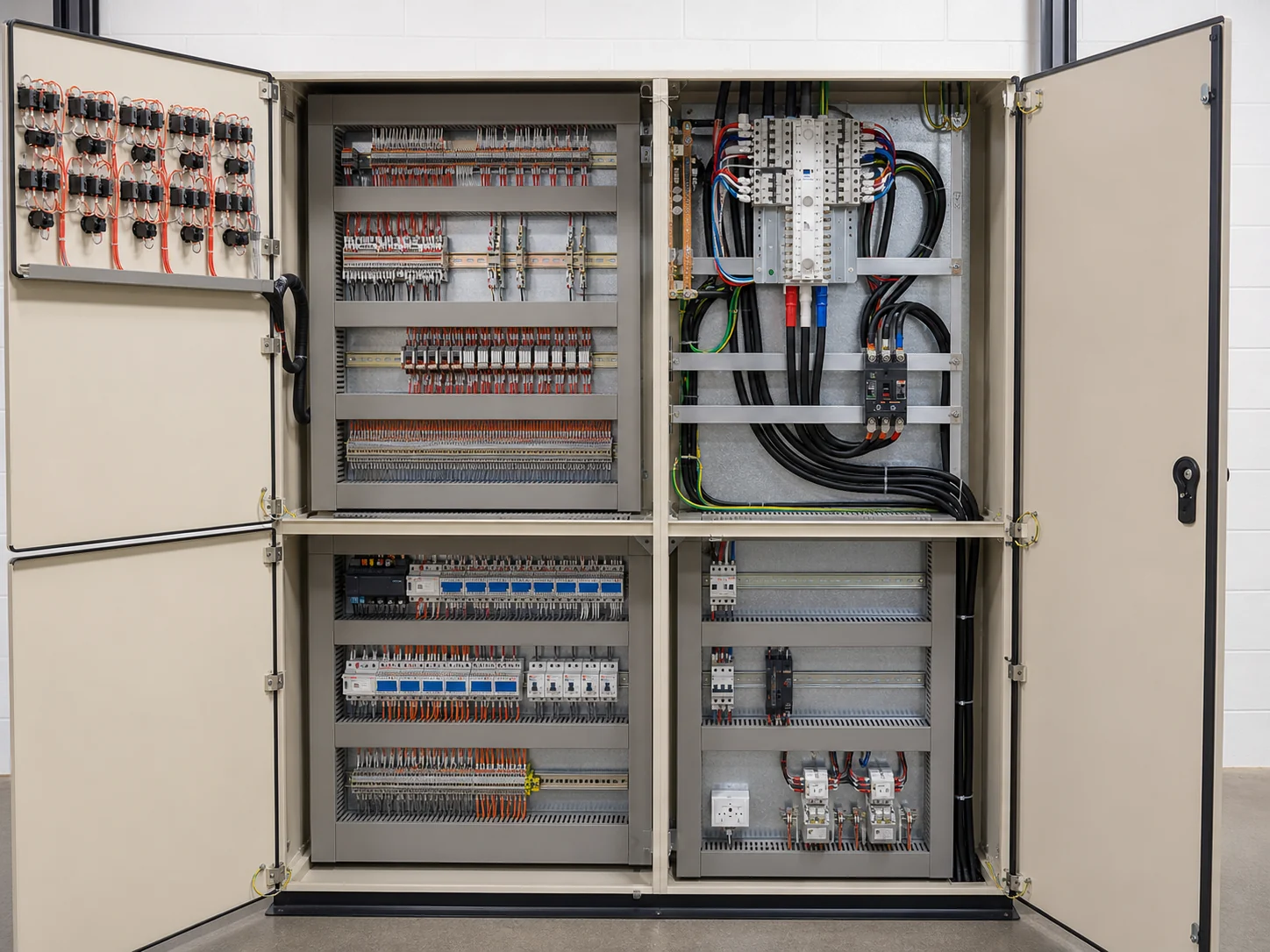
Electrical testing is only one part of handover. Lighting controls need to be proven in each operating mode. Access-controlled doors need to work with fire and security requirements. Mechanical plant and BMS points need to be checked through the complete sequence, not only confirmed at a terminal.
This work is difficult to complete properly when it is compressed into the final afternoon. Agreeing test sheets, witness points and responsibilities earlier gives the project team time to find and resolve issues while the right people are still on site.
What should be left at handover?
- Drawings and schedules that match what was installed
- Electrical test results and certification
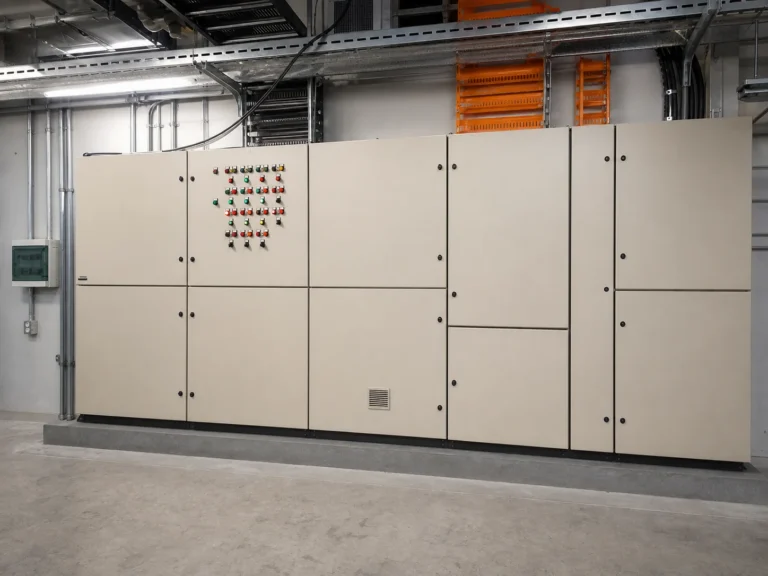
- Clear switchboard, circuit and equipment labels
- Lighting-control and operating information
- Security, access and network records where included
- Commissioning results for connected systems
- A clear list of any agreed outstanding work
After the construction team has gone, the installation should still make sense to the client and the people maintaining it. The client should know how it works, the maintenance team should be able to find what they need, and future contractors should not have to reverse-engineer the building.
Syntra provides commercial electrical services, lighting automation, networking, CCTV, access control, EV charging and connected-building controls. For projects involving mechanical plant, see our BMS and controls capability, or send us a short project outline.
Technical source. Prepared from Syntra’s practical electrical and controls experience, spanning installation, automation, commissioning and building operation. See the experience behind Syntra.