Commercial Switchboard Capacity for EV Charging and Solar
A spare circuit breaker space does not necessarily mean a commercial switchboard has useful spare capacity. Before adding EV chargers, solar, new mechanical plant or a larger tenancy load, the existing supply and the board need to be looked at as one system.
The useful question is not simply, “Will another breaker fit?” It is whether the installation can carry the proposed load safely, whether the protection still works as intended, and whether the change leaves a practical path for the next stage of the site.
Start with what is already there
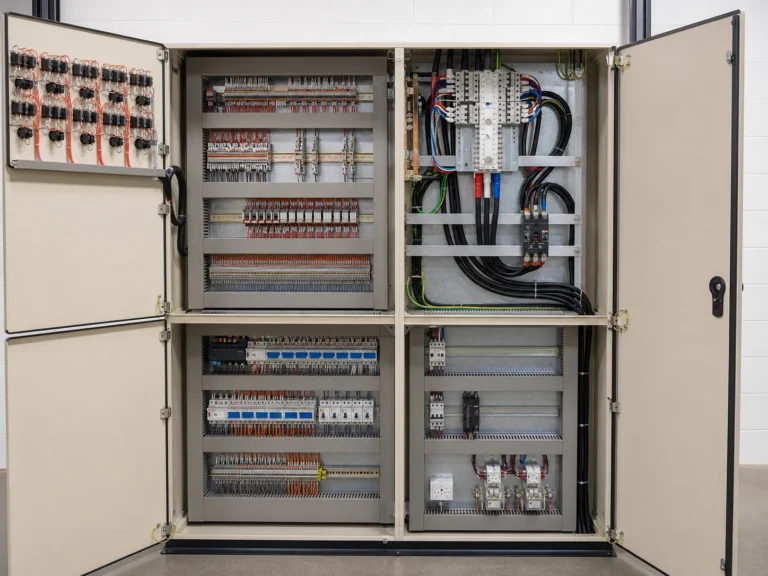
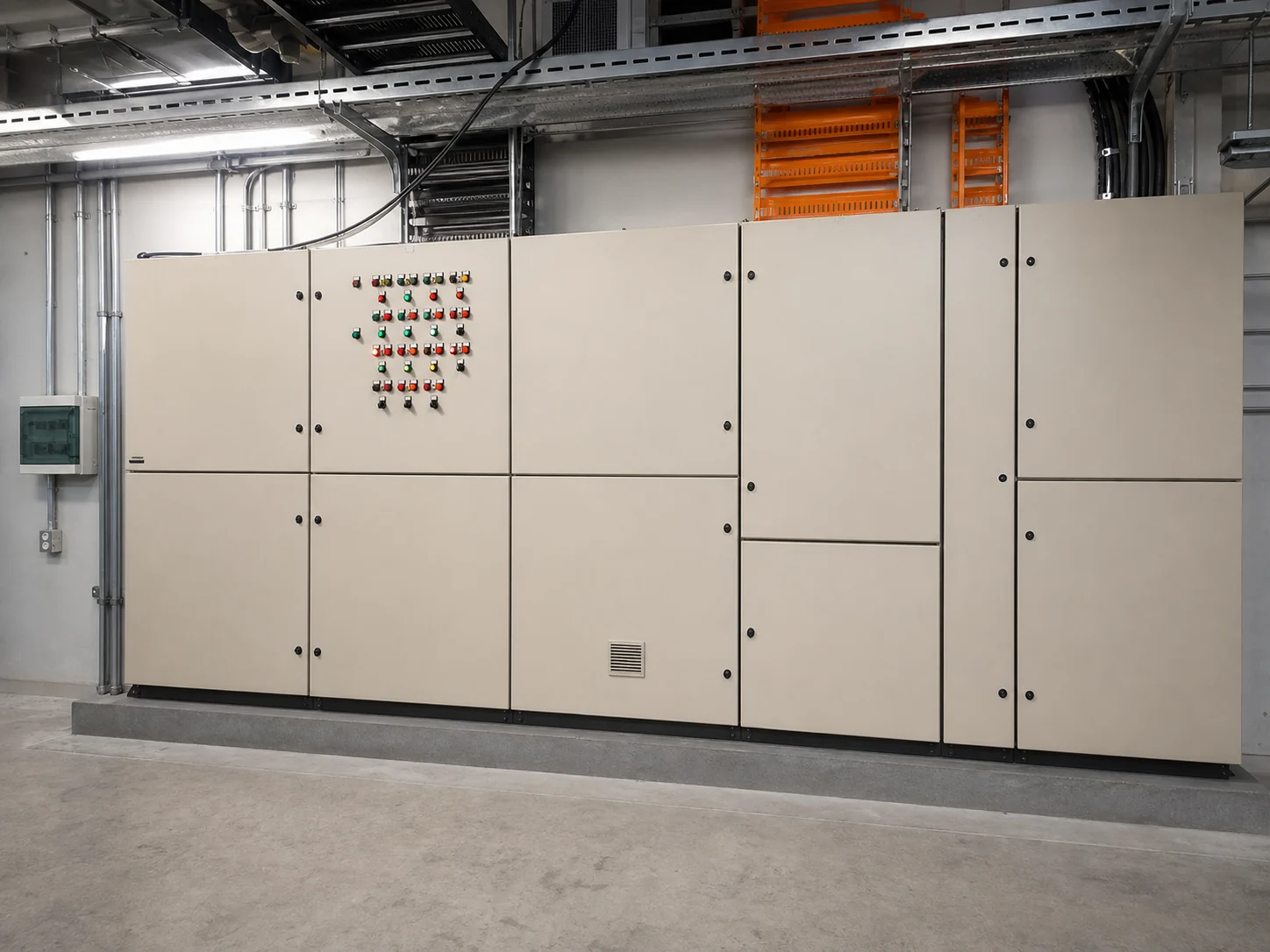
An assessment normally starts with the incoming supply, main switch, busbar rating, protective devices, metering and the cables feeding the board. The condition of the enclosure, terminations, labelling and internal segregation matters too. A board may have an adequate nameplate rating but still need work because it is crowded, difficult to isolate, poorly documented or short of safe cable-entry space.
Existing drawings and schedules are useful, but they should be checked against the installation. Tenancies change, plant is replaced and circuits are added. The board in front of you is the record that matters.
Maximum demand is not the total of every nameplate
Commercial equipment does not always run at full load at the same time. Offices, warehouses, car yards and mechanical plant rooms each have a different operating profile. Maximum demand needs to reflect how the building is actually used, while still allowing for credible worst-case operation.
Where the existing load is uncertain, temporary monitoring can be more useful than guessing. Recording current, demand and operating times over a representative period helps show the genuine peaks, phase balance and how much headroom is available. Seasonal loads need care: a short winter survey may not represent summer cooling demand.
EV charging can be designed around the site
Several chargers do not all need to draw their maximum output continuously. A managed system can share an agreed capacity between vehicles, reduce charging during a site peak and make more power available overnight. This can avoid an unnecessary supply upgrade while still meeting the fleet’s departure times.
EECA’s commercial EV-charging guidance specifically recommends assessing electrical capacity and using load management to prevent the site supply being overloaded. Charger quantity, vehicle dwell time, charging speed and future growth should therefore be discussed together—not treated as separate purchasing decisions.
Solar changes power flow as well as energy use
Solar generation can reduce imported energy, but it does not automatically create capacity for a new load at every time of day. A building may still reach its highest demand after solar production falls, or when cloud cover coincides with plant operation.
The switchboard also needs a suitable connection point, protection, isolation, metering and a clear operating arrangement for generation. Export limits and the distributor’s connection requirements need to be understood early. The Electricity Authority describes solar and batteries as distributed generation connected to local networks and sets out the regulated connection framework.
Check protection and power quality, not only amperes
Adding chargers, inverters or variable-speed equipment changes more than total current. The review may need to consider fault level, discrimination, earth-leakage protection, neutral loading, harmonics and the manufacturer’s requirements for the connected equipment.
This is where a tidy board and accurate records pay for themselves. Protective-device settings, cable sizes and circuit destinations should be identifiable without dismantling half the installation. Any work within the installation must be planned and carried out by people authorised for that work; the Electrical Workers Registration Board explains the limits applying to prescribed electrical work.
Sometimes staging is the sensible answer
A full switchboard replacement is not the only option. Depending on the condition and design, a project might begin with monitoring, load management and a dedicated distribution section sized for planned growth. Spare containment, communications and metering can be installed while access is straightforward.
Replacement becomes more likely when the board is in poor condition, its ratings cannot be confirmed, there is no safe room for the necessary equipment, protection cannot be coordinated, or the incoming supply also needs substantial work. In that case, designing the board around the next ten years is usually better value than repeatedly extending an arrangement that has reached its limit.
Information worth collecting before design starts
- Existing single-line diagrams, board schedules and test records
- Main-switch, busbar, protective-device and supply ratings
- Recent interval or demand data, where available
- Current and proposed mechanical or production equipment
- EV numbers, dwell times and required departure charge
- Proposed solar and battery capacity, including export expectations
- Known tenancy changes or staged expansion
- Shutdown constraints and critical loads
A short site review with this information can establish whether the project needs a small controlled addition, a staged distribution upgrade or a new main board and supply arrangement.
Syntra provides commercial electrical services, switchboard and distribution planning, EV charging, solar integration, monitoring and connected-building controls. For plant and controls interfaces, see our BMS and automation capability, or send us the site information you already have.
Technical source. Prepared from Syntra’s practical electrical and controls experience, spanning installation, switchboards, automation, commissioning and building operation. See the experience behind Syntra.