What Is Electrical for Mechanical (E4M)? A Practical Guide
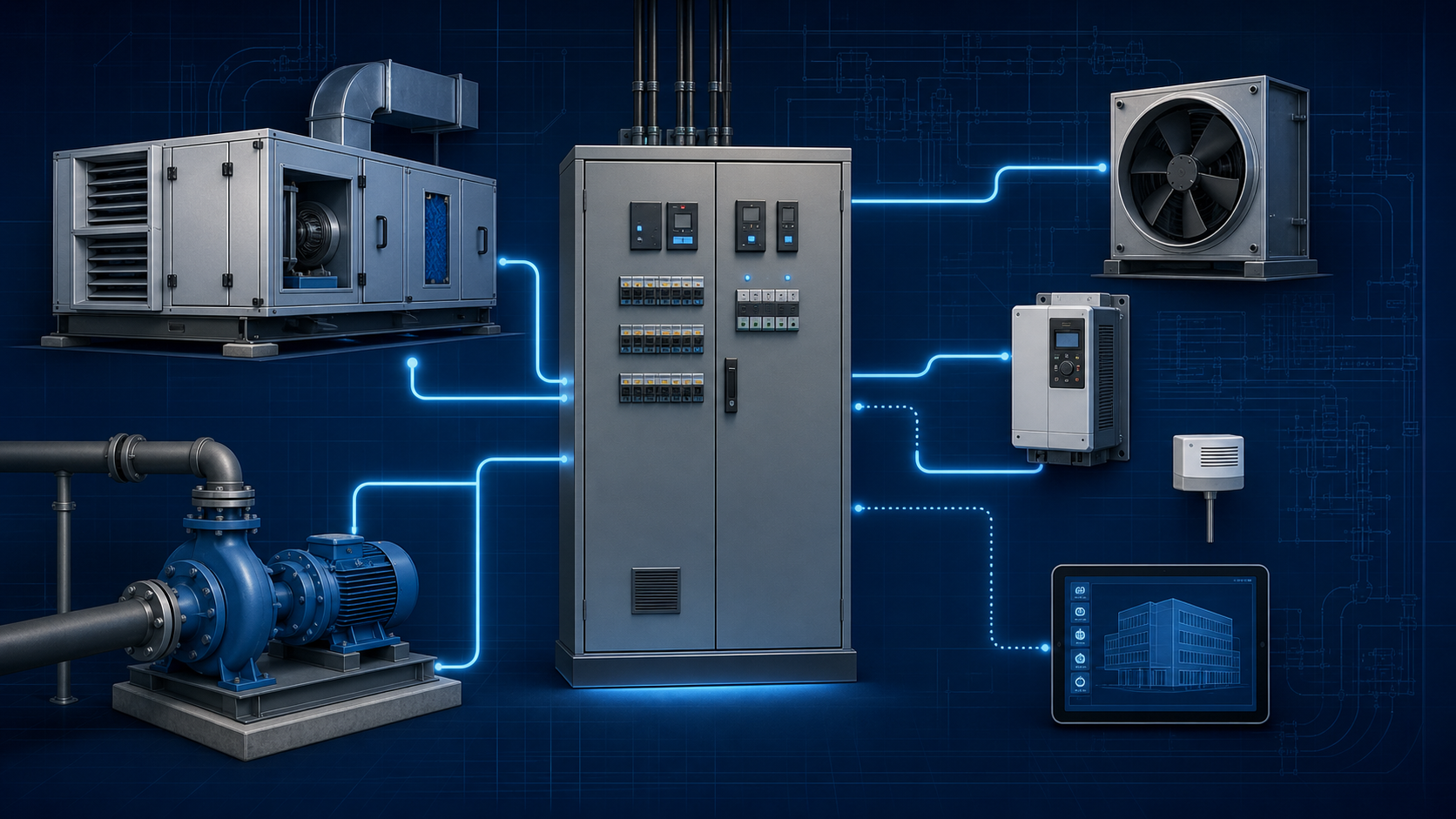
Electrical for Mechanical (E4M) is the electrical and controls work required to power, protect, connect and help operate mechanical building services. It commonly sits between the electrical, mechanical and controls packages, covering equipment such as air-handling units, pumps, fans, chillers, boilers, heat pumps and variable speed drives.
A well-defined E4M package gives the plant suitable power, isolation and control interfaces, with responsibilities understood before testing starts. A poorly defined package can leave gaps between trades, create late variations and delay the point at which the mechanical system can operate as intended.
What does E4M mean?
E4M is short for Electrical for Mechanical. It is a common project term rather than a single universal scope definition. The exact responsibilities depend on the drawings, specifications, equipment selections, controls philosophy, procurement model and the way the project team divides the work.
In practical terms, E4M connects the electrical infrastructure of a building to its mechanical services. The mechanical contractor may supply the plant, while the E4M contractor provides the electrical distribution, field wiring, controls connections and related coordination needed to make that plant safe and functional.
What is normally included in an E4M scope?
Every project is different, but an E4M package may include:
- Power supplies and final subcircuits for mechanical plant
- Local isolators and lockable isolation arrangements
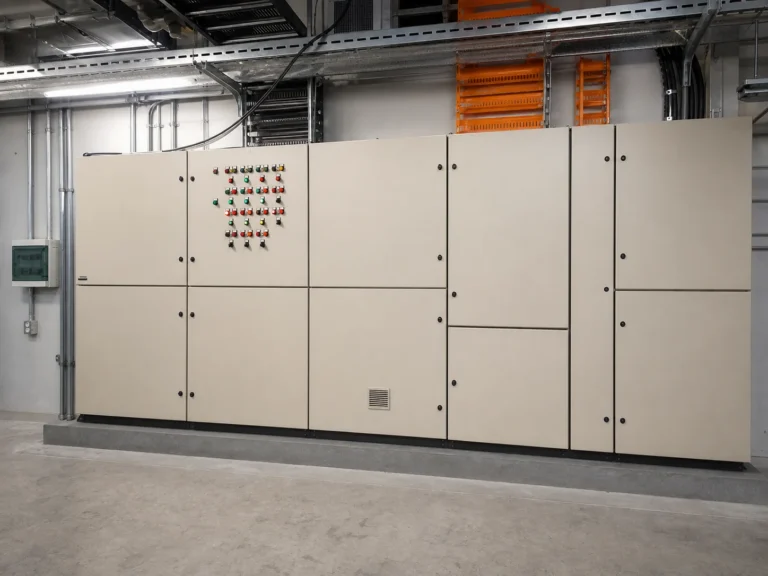
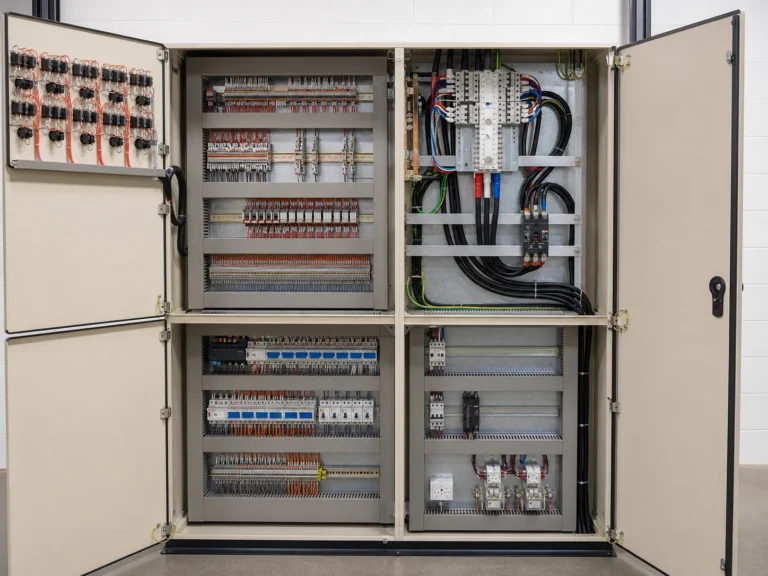
- Mechanical services switchboards and control panels
- Motor starters, contactors and protective devices
- Power and control wiring for pumps, fans and packaged equipment
- Variable speed drive (VSD) supplies, motor cabling and control interfaces
- Run, fault, enable and speed-reference signals
- Connections to sensors, actuators, dampers, valves and safety devices
- Fire alarm shutdowns and other life-safety interfaces where specified
- Connections between mechanical equipment and the Building Management System (BMS)
- Testing, labelling, certification, commissioning support and handover documentation
The word “normally” matters. A fan supplied with an integral controller, for example, may need only power and an enable signal on one project but require multiple hard-wired statuses, analogue signals and network integration on another.
Where does E4M stop and BMS work begin?
The boundary is set by the project documents. E4M often includes the physical power and control wiring to mechanical equipment, while the BMS and controls package may include controllers, software, graphics, programming, network integration and the control sequence. In some delivery models, one specialist provides both packages.
The package name matters less than knowing who owns every supply, cable, device, control point and commissioning task. A controls points list, equipment schedule and interface matrix are valuable because they turn broad specification language into assignable work.
Why is scope coordination so important?
Mechanical plant rarely arrives as a single standard electrical load. Different manufacturers use different control arrangements, voltages, communications protocols and factory-fitted components. Equipment selections may also change after the tender has been priced.
Good coordination should confirm:
- Who supplies each switchboard, controller, sensor, actuator, isolator and VSD
- Who installs each item and who terminates each end of every cable
- The final electrical load, starting method and protective-device requirements
- Whether controls are hard-wired, networked or a combination of both
- Which party provides the control sequence, software and BMS graphics
- How fire, smoke control, gas, refrigeration and other safety interfaces operate
- Who performs pre-commissioning, functional testing and integrated testing
- What drawings, certificates, backups and manuals are required at handover
This coordination is particularly important for refurbishments. Existing switchboards may have limited capacity, legacy controls may use proprietary communications, and shutdown windows may be short. A site survey and a look through the existing records usually expose these problems before they become variations on site.
E4M and variable speed drives
VSD installations are a common source of interface questions. The work can involve the incoming supply, motor cabling, local isolation, electromagnetic compatibility considerations, run and fault signals, speed control, safety circuits, bypass arrangements and network communications.
The design should be based on the selected drive, motor, cable route, control method and manufacturer requirements. It should also make clear who commissions the drive parameters and who proves that the mechanical plant responds correctly to the BMS command.
Safety, testing and certification
E4M includes electrical work, so the finished installation must be electrically safe and the relevant work must be carried out, tested and certified by appropriately authorised people. New Zealand requirements depend on the work and installation involved. The current regulatory and standards position should be checked for each project rather than assumed from an old specification.
WorkSafe New Zealand’s guidance on low-voltage electrical installations explains that designs and completed installations must be electrically safe and identifies the applicable transition arrangements for AS/NZS 3000. WorkSafe also emphasises isolating all relevant energy sources and releasing stored energy when machinery is locked out. Mechanical plant can involve electricity, pressure, heat, fluids and moving components, so isolation planning should consider more than the electrical supply alone.
Electrical completion is only one stage. The project should also allow time for point-to-point checks, rotation checks, safety interlock testing, control-sequence testing, alarm verification, BMS graphics checks and witnessed functional commissioning.
Common E4M tender gaps
- Mechanical schedules and electrical schedules show different loads
- VSDs are shown but their supplier, location or bypass requirements are unclear
- No controls points list or sequence of operation is provided
- Fire shutdown requirements are mentioned without a complete interface description
- Packaged equipment is assumed to be “self-contained” without confirming its external connections
- Existing services are shown as reusable without condition, capacity or compatibility checks
- Commissioning responsibilities are spread across several specifications
- Temporary operation, staged handover and after-hours shutdowns are not allowed for
These items do not always indicate a design problem. They indicate questions that should be resolved early and recorded in the scope, tender clarifications or responsibility matrix.
What should a good E4M proposal make clear?
A useful E4M proposal should identify the documents reviewed, the equipment and systems included, the expected interfaces, key assumptions, exclusions, commissioning allowance and the information still required. Clear proposals make it easier for the project team to compare scope and reduce ambiguity before construction starts.
Frequently asked questions
Is E4M the same as mechanical controls?
Not necessarily. E4M commonly includes electrical supplies and field wiring for mechanical systems. Mechanical controls may also include controllers, programming, graphics and control sequences. The packages can overlap or be combined, so the project documents must define the boundary.
Does E4M include the BMS?
Sometimes, but not automatically. The BMS may be a separate specialist package or may be delivered with E4M by one controls and electrical contractor.
Who supplies the VSD?
The electrical contractor, mechanical contractor, equipment supplier or controls contractor may supply it. The tender documents should identify the responsible party and the requirements for installation, configuration, controls integration and commissioning.
When should the E4M contractor become involved?
Early involvement is valuable during design development, equipment selection and tender review. It gives the team time to resolve loads, interfaces, board capacity, containment, shutdowns and commissioning requirements before they affect the programme.
Planning an E4M project?
Explore Syntra’s electrical and automation services. Syntra Electrical delivers structured commercial electrical and automation work for mechanical services, controls and integrated building systems. If you are planning a new installation, refurbishment or controls upgrade, contact Syntra to discuss the scope, interfaces and commissioning requirements.
Technical source. Prepared from Syntra’s practical electrical and controls experience, spanning installation, automation, commissioning and building operation. See the experience behind Syntra.