Choosing a Commercial Electrical Contractor for Offices, Car Yards and Warehouses
On a commercial job, outlets and light fittings are only one part of the electrical scope. Offices, car yards, warehouses and active facilities require coordination across power, lighting, networking, CCTV, access control, automation, mechanical services and future energy requirements.
Look for coordination across systems
A commercial electrical contractor should understand the interfaces between distribution, lighting controls, communications, security, mechanical services and the wider construction programme. Agreed responsibilities reduce gaps between trades and give the project team a chance to resolve issues before installation.
Consider the operating environment
An office fit-out has different priorities from a car yard or warehouse. Occupancy patterns, exterior and display lighting, vehicle movements, high-bay spaces, maintenance access, hours of operation and business continuity all affect the design and delivery approach.
Plan power and future capacity
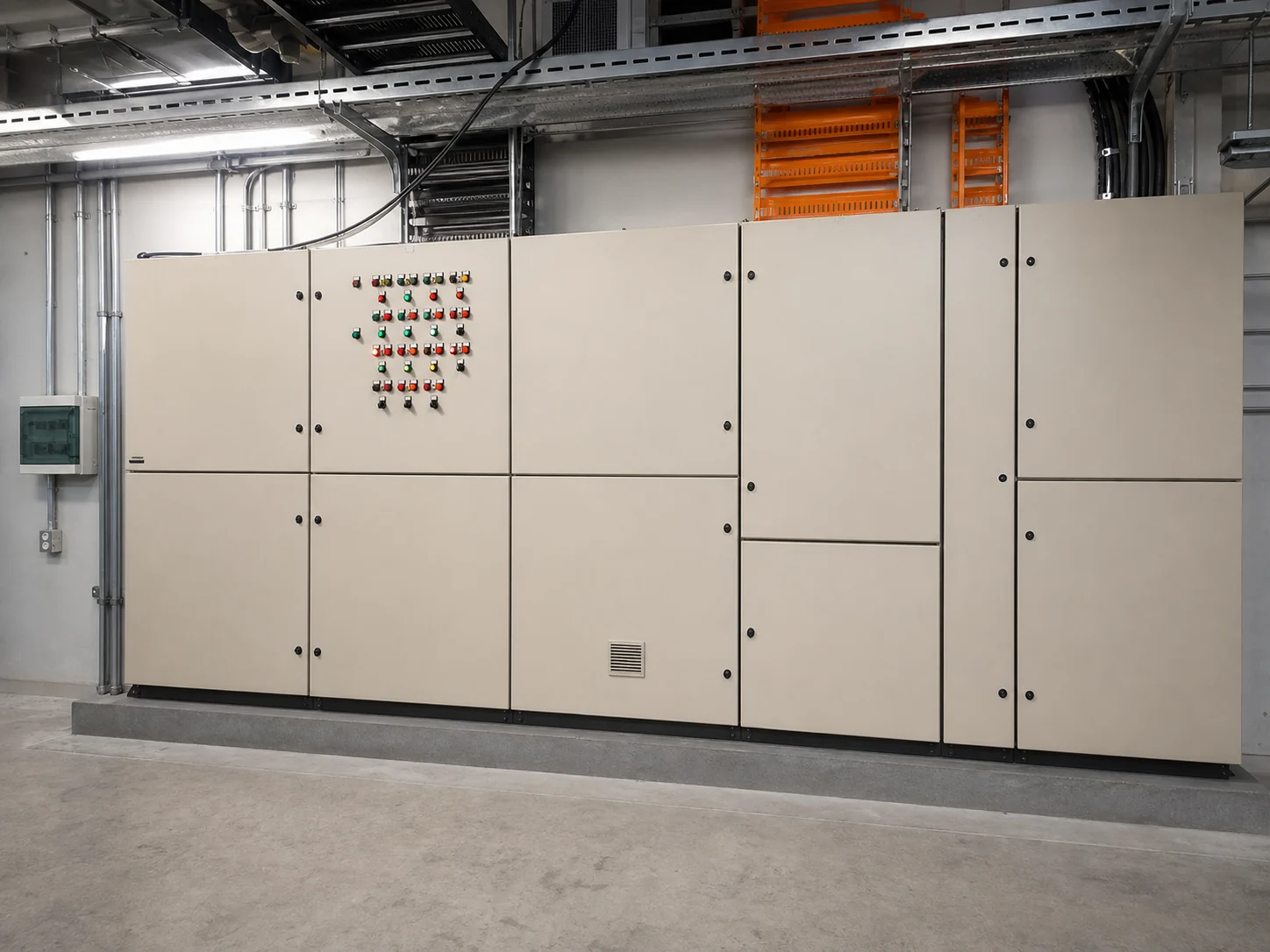
Review incoming supply, distribution, equipment loads, metering and the likely effect of solar, EV charging or future tenancy changes. The design should meet the current brief without blocking likely future changes.
Coordinate networking, CCTV and access
Communications racks, cable pathways, camera power, door hardware, intercoms and controlled gates should be coordinated early. This improves coverage, reduces rework and makes the finished systems easier to maintain. The security and network requirements should be considered alongside the electrical drawings, not after containment is installed.
Use lighting controls where they add value
Schedules, occupancy control, daylight harvesting and appropriate zoning can reduce wasted energy while keeping the building straightforward to operate. Controls should suit the real use of the space and include sensible override and maintenance provisions. Read more about daylight harvesting in commercial warehouses.
Require testing and useful records
Commissioning, circuit schedules, labelling and accurate as-built information matter after practical completion. They allow facility teams and future contractors to understand what was installed, how it should operate and where interfaces sit.
Explore Syntra’s commercial electrical and lighting automation services, review our wider electrical and automation capability, or discuss an upcoming commercial project.
Technical source. Prepared from Syntra’s practical electrical and controls experience, spanning installation, automation, commissioning and building operation. See the experience behind Syntra.